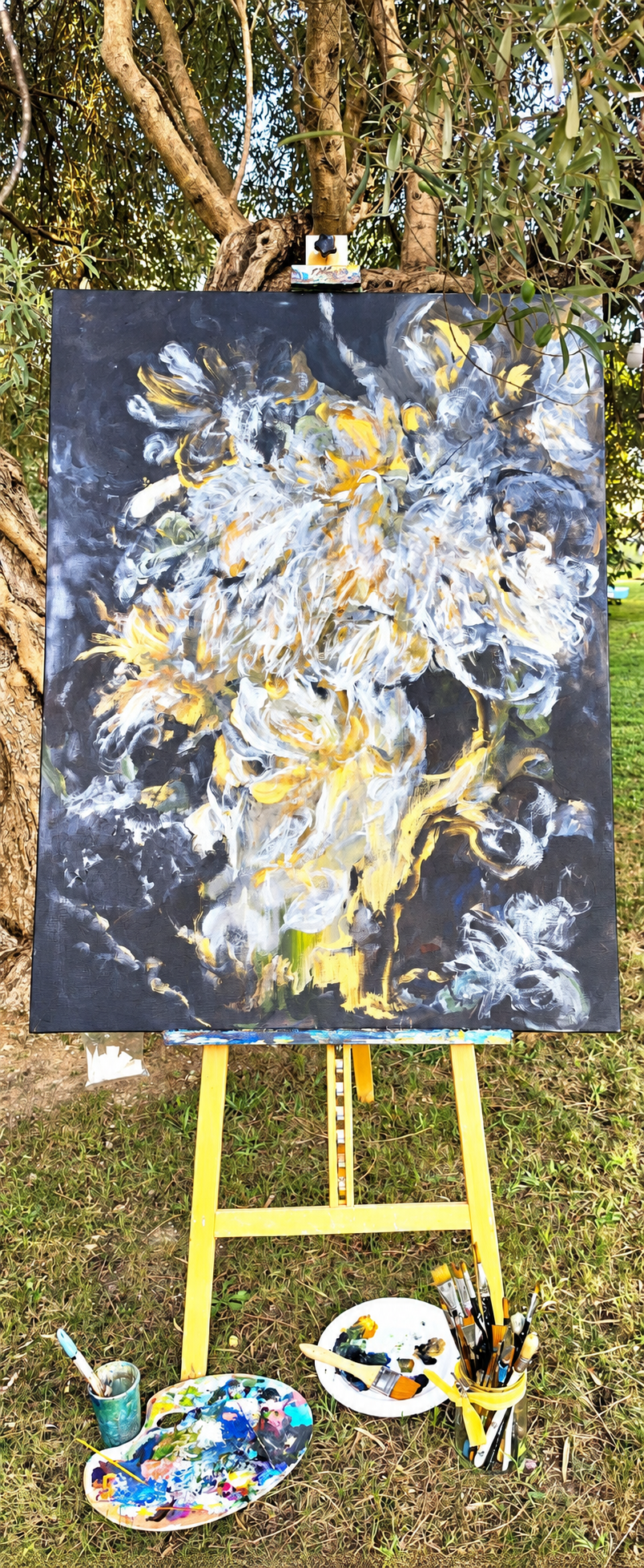
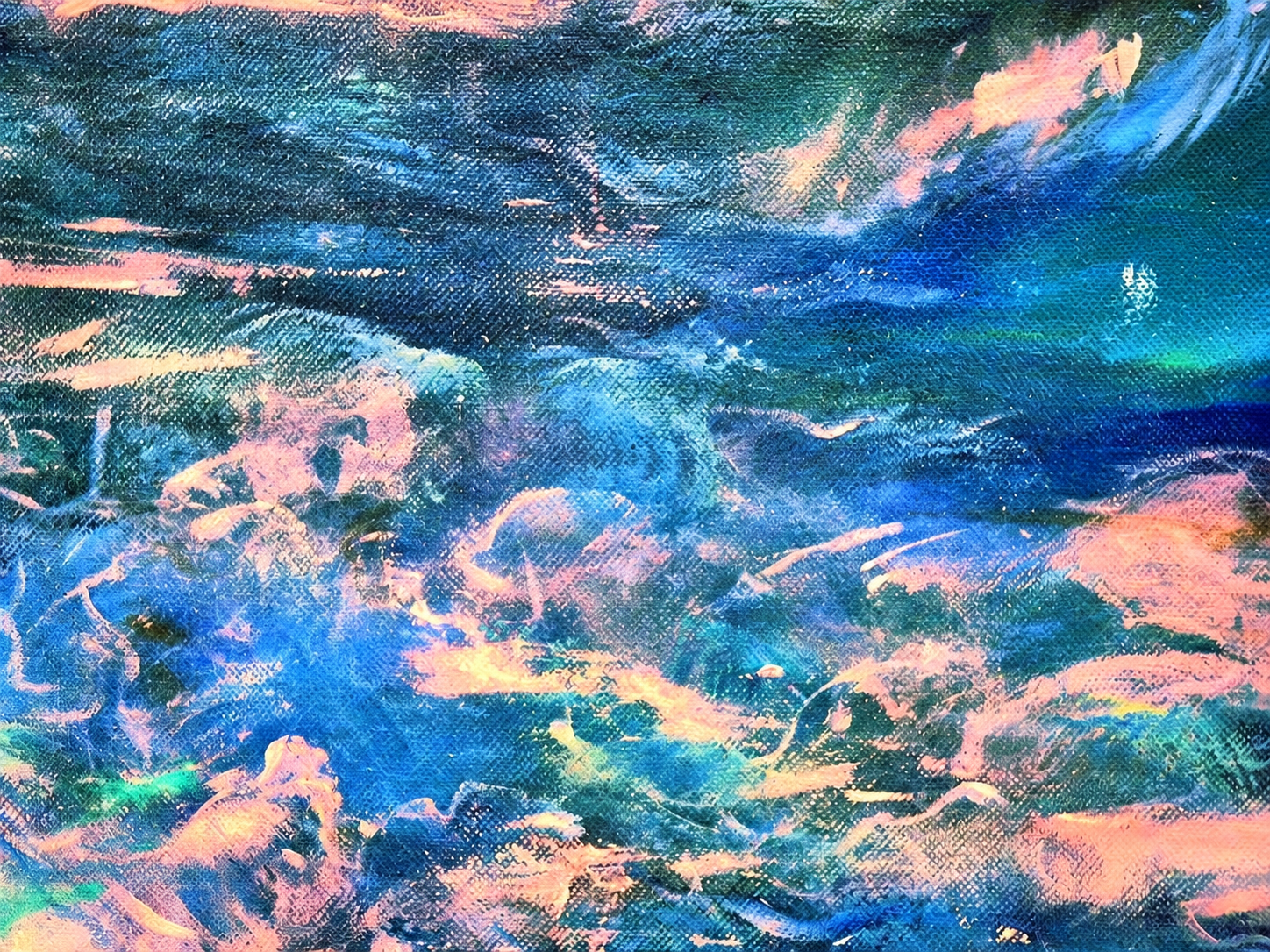
Sometimes I return to a painting and notice something that had previously escaped me. It may be a detail; at other times, the entire image seems to arrange itself differently. A form I readily recognised becomes uncertain, while a neglected area begins to hold the composition together. The painting has remained the same. What has changed in the way I see it?
We look at an image and at first believe we recognize what it depicts. A form emerges, a relationship between colours guides us, a memory or an idea arises. Yet this first reading may change. A detail we had overlooked alters the whole; what seemed evident becomes uncertain. We look again, with a different idea of what is before us.
Before Wesen, I first try to recognize something. Perhaps a flower, or several forms caught in the same movement. I am tempted to separate them, to give them an outline and a name. Yet whenever I return to the canvas, the marks that seemed to confirm that first reading lead me elsewhere. The painting has not changed. My gaze has.
We approach an image with our eyes, but also with a history. We have recognized forms before, learned to name things and kept faces, places and colours in memory. All of this accompanies our gaze, often without our knowing it. Yet the image in front of us has its own material presence. Its lines meet in a particular way; light emerges in one place rather than another.
I borrowed the title Mysterium Coniunctionis from the work of C. G. Jung because this collection took shape as an exploration of the unconscious. Through painting, I embarked on a journey toward myself, but also toward the world around me—toward that outer unconscious which accompanies our gestures, runs through nature, and reveals itself when the gaze ceases to believe it…